Structure Gets You Answers. Culture Gets You the Truth.
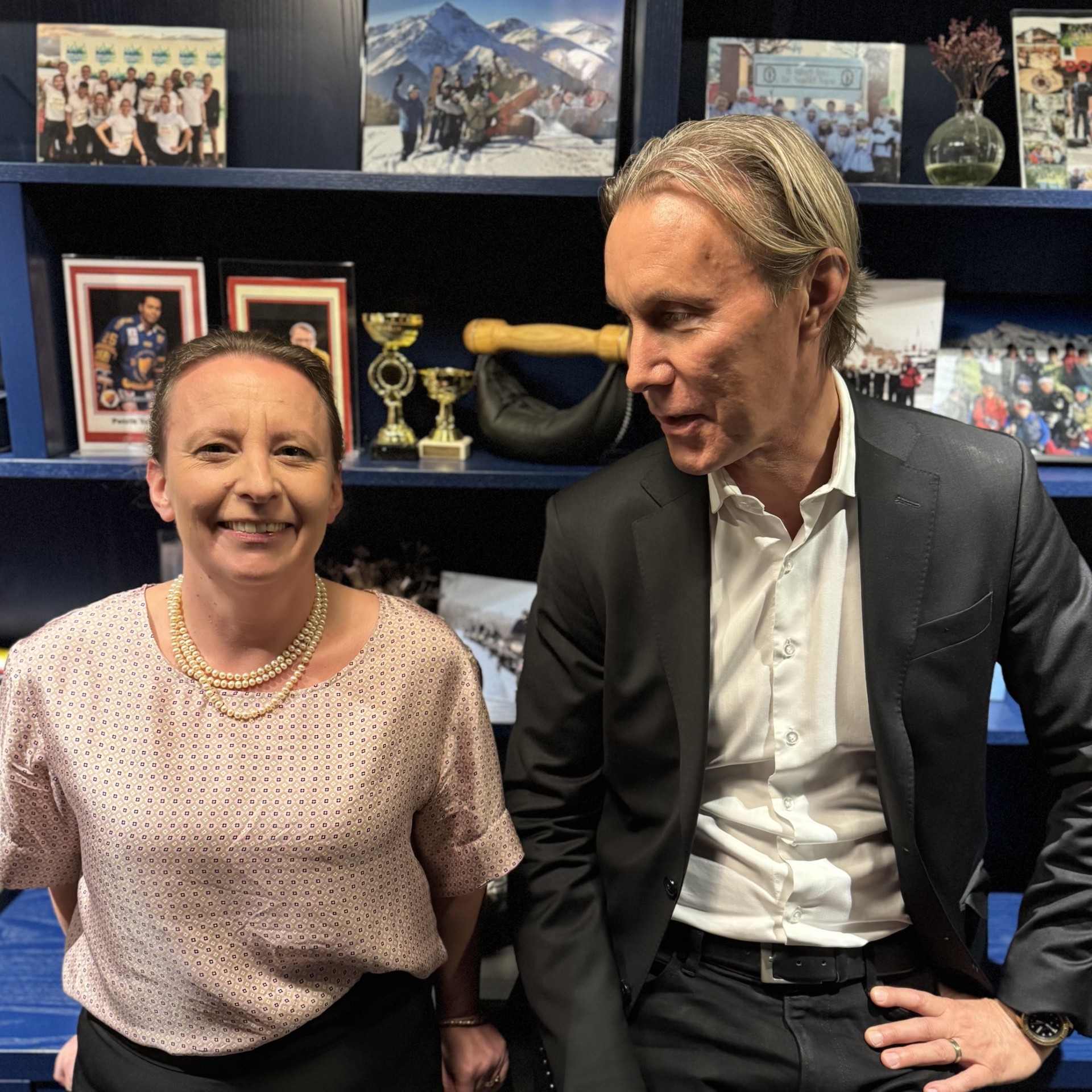
Quality assurance is meant to make work better. For many people, it feels more like an audit. Petra Ehle of Influence People and Fredrik Westlund of Aurentor discuss a recent review of a large client program and the balance between structure and culture that makes a review worth doing.
Few words change the mood in a project team quite like “review.”
Someone from outside will look at how the work is planned, organized and led. They will talk to the team. They will draw conclusions. However good the intentions, most people know the instinct that follows: prepare, tidy up, make sure everything looks under control.
Petra Ehle, Partner at Influence People, knows that instinct well.
“Earlier in my career, if someone had told me they were going to run a QA on my project, I would have panicked,” she says. “Even during my first year at Newground, I would probably have felt the same.”
This fall, she asked for one.
A review nobody ordered
Petra leads a complex client program. Recently, the pressure was high, with many things happening at once.
She realized that the best way to give the program a better chance of success was to take a closer look at Newground’s own work, with help from an experienced colleague.
“For me, this was never about showing that I was good or getting credit,” Petra says. “It was about us getting better together. That means putting your ego aside and letting go of the fear of being judged.”
The review was led by Fredrik Westlund, Partner at Aurentor, who has run large programs for many years. He is clear about what he wanted to avoid.
“The traditional way, if you grew up in the Big Four world, was that heavyweight partners flew in from somewhere and went through everything in detail,” Fredrik says. “It smells a bit of an audit. People go on guard, and you don’t get much honest feedback.”
His own definition is broader.
“The purpose of a QA is to improve the conditions for success. Quality is only one part of it. You can deliver quality and still be completely wrong, or get there through a process that is far too painful and costly.”
That means looking at more than the plan. “You can’t only check whether the structure is in order,” he says. “You have to look just as closely at the culture: how people sound when you talk to them, and what the mood is in the team.”
Why it matters who asks
For Fredrik, the most important factor was in place before the first interview.
“If Petra had felt this was something imposed on her, rather than something she asked for, she would have been in a completely different place,” he says. “You become worried and protective. And the team picks up on it: our program lead is under scrutiny, and we will be affected too.”
The kind of openness a review depends on is part of Newground’s culture, and Petra carries it into her own team. In meetings, she makes sure everyone speaks, and she admits her own mistakes.
“I tell the team I don’t have all the answers and that they should challenge me,” she says. “Then I have to live up to it. When someone disagrees, I thank them, take it seriously and follow up.”
Petra also welcomed the chance for the team to give her feedback on her leadership.
“I was genuinely curious about what would come out,” she says. “Whatever people think, I want to know. That’s how we get better. Bringing in someone from outside, who doesn’t carry all the history and details, helps you see what you’ve stopped noticing.”
Kind, for real
Closeness has a risk of its own. A reviewer who knows and likes the people involved may be tempted to go easy on them.
Fredrik separates two things.
“When it comes to what I see in the work itself, you have to be brave. Being kind for real means not smoothing things over,” he says. “If I care about my colleagues and my company, I have to stand by what I see.”
Observations about individuals are different. “There you need sensitivity, both in how you phrase things and in how you handle any changes. What doesn’t work in one situation isn’t necessarily about the person. It can be about the fit, or even about me as a reviewer. Being honest also means being fair.”
An invitation to be honest carries an obligation to handle that honesty responsibly.
Fredrik thinks of every review conversation in three stages. Before, people need to understand the purpose and know how what they say will be used. During, the tone has to make it safe to share what actually matters. What happens afterward determines whether that trust is reinforced or lost.
“People need to feel that the promise was honored,” he says. “They should recognize their own contribution and see that it led somewhere useful. Otherwise you won’t get the same openness next time.”
The interviews were candid.
“Nobody tried to impress me with a polished answer that told me very little,” Fredrik says.
Even Petra’s own role was open for discussion: what the program needs from its lead, and what support would make that role work best.
For Petra, little was new. What changed was her perspective.
“Fredrik confirmed what I was already seeing, and helped me step back,” she says. “When you’re deep in a program, someone from outside sees the bigger picture more easily.”
A philosophy, not a process
Newground’s Access to Market initiative, which works on business development across the alliance, now intends to use QA more systematically. That raises a harder question: can openness be formalized without losing it?
Fredrik is skeptical of a fixed model.
“We are people before processes,” he says. “I would be quite uninterested in carving out a QA process. But we could describe our philosophy: why we do QA, what we mean by it and which perspectives matter. Then every review is adapted to the client, the assignment and the people involved.”
Petra sees value in shared questions and clear ground rules that make this kind of reflection easier to repeat. They would protect what made this review work: people speaking freely. Interviews are confidential so that people can be candid. Findings describe the whole, not individuals. Nothing feeds into performance reviews, and teams are not compared or ranked.
“It’s not about grading anyone,” she says. “It’s about learning and getting better together.”
Making QA systematic carries a risk. A shared structure can help more teams benefit from it, but it can also become a routine people learn to get through without saying what they really think.
“Extreme transparency and humility win in the long run. Why play the role of always having the right answer? It isn’t true anyway,” says Fredrik.
The structure of a review is easy to copy: the questions, the interviews, the summary. The culture that makes people answer honestly is not.
The test is what it makes possible: whether people can describe the work as they experience it, whether difficult observations are taken seriously, and whether someone acts on what has been learned.